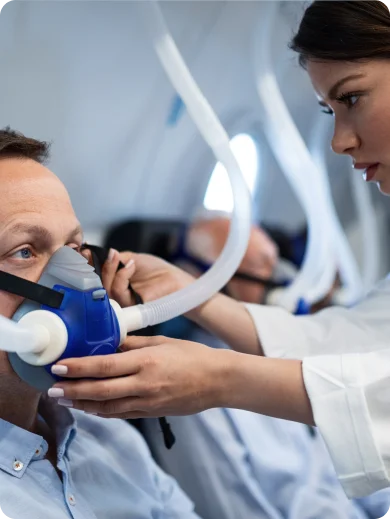
Adgyl Lifesciences offer well-controlled inhalation toxicity studies designed to
evaluate systemic and local respiratory effects, supporting
informed risk assessment and regulatory decision-making across development
programs.
Inhalation studies are performed using nose-only exposure systems. We also provide inhalation studies in non-rodents such as canine and
swine, in collaboration with a strategic partnered laboratory. Inhalation
studies encompasses acute, repeat-dose studies of
7–14 days, 28 days, and up to 90 days. Exposure durations are flexible and can be
adapted to meet specific regulatory or program requirements, enabling accurate
dose-response evaluation and identification of target organs.
Our dedicated inhalation facilities support powder and aerosol exposures with robust
atmosphere characterisation and monitoring. Integrated endpoints include exposure
analysis at the breathing zone, pharmacokinetics, respiratory and systemic
pathology, and detailed histopathological evaluations, ensuring a comprehensive
assessment of inhalation safety.
Key Studies Include
Acute inhalation study (4 hours continuous exposure or based on requirement)
Repeat dose 7 to 14 days inhalation study (15 minutes to 6 hours continuous exposure/day or based on requirement)
Repeat dose 28 days inhalation study (15 minutes to 6 hours continuous exposure/day or based on requirement)
Repeat dose 90 days inhalation study (15 minutes to 6 hours continuous exposure/day or based on requirement)
Adgyl Lifesciences offers following IND enabling studies:
Exploratory studies (Non-GLP)
Mini Ames
Mini hERG (hERG screening)
Dose range finding studies
CVS function screening in telemetered dogs
Genotoxicity (GLP)
Ames Test
In vitro Chromosomal aberration test in Human Peripheral Blood Lymphocytes (MUT CHAB/HPBL)
Micronucleus test (MNT) in Mice/Rats
Process Hazard Analysis
hERG assay
Modified Irwin Test/Functional Observation Battery in rats (FOB-Rats)
Pulmonary functions(Rats)
CVS function assessment using telemetered dogs
Toxicology studies (GLP)
Maximum Tolerated Dose (MTD) followed by 10 day repeat dose range finding(DRF) in Rat
28-Day Repeat dose toxicity study in Rat
Maximum Tolerated Dose (MTD) followed by 10 day repeat dose range finding(DRF) in Dog
28 Day Repeat dose toxicity study Dog
Scientific Partnership
Partnering for Scientific Excellence
Adgyl Lifesciences is committed to ensure
Scientifically rigorous, reproducible and timely study execution.
High‑quality data generation aligned with scientific & regulatory requirements
Seamless end‑to‑end support spanning study design, execution, and data interpretation.
Connect with our expert team today to discuss how we can support your inhalation
toxicity studies.
what people ask
Frequently Asked Questions
What exposure methods are used in your inhalation studies?
We utilise nose‑only inhalation exposure systems to ensure precise and controlled
delivery of test substances. This approach minimises non‑respiratory exposure and
allows accurate assessment of inhalation‑specific effects.
What types of inhalation toxicity studies do you offer?
We offer a full range of inhalation toxicity studies, including acute inhalation
studies and repeat‑dose studies of 7–14 days, 28 days, and up to 90 days. Study
designs and exposure durations can be adapted based on specific project or
regulatory requirements.
How do you ensure proper characterisation of the test atmosphere?
We perform detailed characterization of the inhalation atmosphere, including test
item concentration, particle size distribution (MMAD and GSD), oxygen and carbon
dioxide levels, temperature, and humidity, to ensure well‑controlled and reproducible
exposure conditions.
Can inhalation studies be integrated with pharmacokinetic assessments?
Yes. Pharmacokinetics and exposure assessments in blood and/or tissues can be
integrated into inhalation toxicity studies to support exposure–response evaluation
and safety margin determination.
Are these inhalation studies suitable for regulatory submissions?
Yes. Inhalation toxicity studies are designed and conducted in alignment with
applicable regulatory guidelines, supporting regulatory submissions
and safety assessment.